The Crisis Begins at 6:42 AM
Your phone buzzes. One notification. Then another. Then 27 more. You open your social dashboard: 32 missed calls. 14-second video. 2.3 lakh views. A rumour involving your brand is spreading faster than your team can even assemble. What used to take PR teams six hours to discover now takes six minutes to damage. This is the new reality of online reputation. To counter this, businesses must adopt robust AI crisis communication strategies.
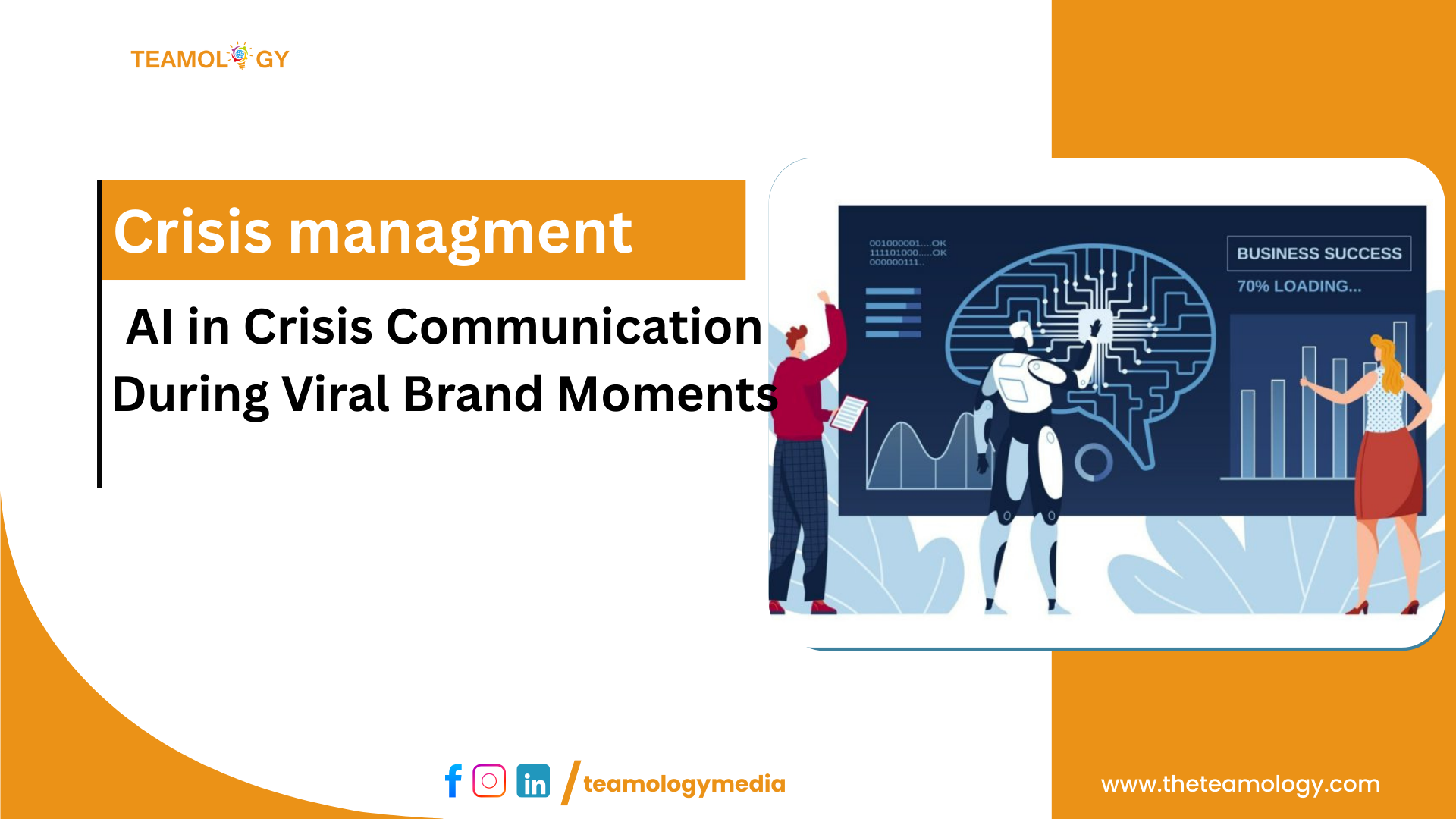
But here’s the part most brands don’t realize: AI can detect a crisis long before humans even notice the first spark. However, AI in PR crisis management is not just a buzzword. It’s a full system—part technology, part human intelligence—that protects brands in the trust economy. This systematic approach is the core of AI brand reputation management.
Let’s break this down clearly, practically, and with real-world nuance.
Why Crisis Management Needs AI, Not Just Human Monitoring
Human teams can only monitor so many platforms, so many comments, so many signals. The first line of defense requires real-time AI monitoring tools.
These advanced AI tools for crisis management can process:
-
millions of mentions
-
across 100+ platforms
-
in multiple languages
-
in real time
And they don’t sleep, panic, or get overwhelmed. This speed is crucial not just for detection, but specifically for AI for handling viral moments.
But saying “AI can do everything” is an oversimplification. AI does not understand context as well as a human does. It predicts, it flags patterns, and it amplifies decision-making—but humans lead the strategy. So the real mantra of success is AI + human judgment, not AI alone.
The 11-Minute Crisis Breakdown — What AI Actually Does
Imagine the 14-second viral clip spreading. Here’s how AI handles it:
Minute 1 — Detection AI platforms like Brandwatch, Sprinklr, Talkwalker, and Meltwater start registering unusual spikes:
-
sudden comment surges
-
repeated keywords
-
unusual sentiment dips
This is powered by NLP, anomaly detection, topic clustering, and velocity scoring.
Minute 3 — Interpretation: AI analyzes conversations for:
-
sentiment patterns
-
emotion markers (anger, frustration, sarcasm — with limitations)
-
political or cultural triggers
-
key influencers amplifying the narrative
AI might not be able to understand nuances and sarcasm in Indian languages, but AI can give an early assessment.
Minute 6 — Impact Prediction Machine learning models compare current behaviour with past crisis patterns and estimate:
-
How fast it may spread
-
Which communities may pick it up
-
possible reputation risk
-
initial recommended actions
This is probabilistic, not certain—but it gives your team a head start.
Minute 10 — Stakeholder Mapping AI identifies:
-
The top accounts driving the spread
-
key journalists showing interest
-
customer sentiment clusters
-
potential misinformation nodes
Minute 11 — Suggested Responses AI drafts:
-
early holding statements
-
apology/reassurance templates
-
influencer outreach lists
-
internal alerts
The output informs your overall AI communication strategy. But humans make the final call.
What We Learned from Real Brand Crises (and How AI Would Help)
- Tanishq’s 2020 Backlash
How AI helps: AI sentiment tracking could detect rising political tensions earlier. Topic modelling would identify sensitive keyword clustering. Alerts help teams re-evaluate risky messaging before launch.
- Maggi’s 2015 Crisis
AI advantage: Real-time detection of misinformation spikes, early influencer mapping, and predictive modelling to plan phased messaging.
- Zomato Delivery Incidents
AI advantage: Location-level alerts, quick identification of real vs. fabricated claims, and rapid development of holding statements. This ability is vital for successful AI for social media crisis response.
- Pepsi’s Kendall Jenner Ad
AI’s realistic role: Audience testing simulation, emotional tone scoring, and cultural sentiment screening. But the root failure was human decision-making, not lack of data.
AI Does Not Predict the Future — It Predicts Patterns
Tools use:
-
neural networks,
-
transformer-based NLP model,s
-
supervised machine learning,
-
large-scale sentiment training sets
But they are still limited by: biased data, lack of contextual knowledge, sarcasm in regional languages, political nuance, and cultural subtleties. This is why AI can detect signals early, but humans can judge the intent, tone, and narrative strategy.
The Trust Economy and the Price of a Mishandled Crisis
Reputation recovery can cost:
-
3–6 months of brand rebuilding
-
30–50% drop in sentiment score
-
lakhs in PR damage control
-
long-term customer distrust
AI minimizes the damage by providing AI-driven reputation protection that acts early, but human credibility plays a crucial role in saving the brand.
How to Get Started with AI-Based Crisis Management (Practical Guide)
- Audit What You Have: Map your current monitoring tools, escalation workflow, and internal communication channels.
- Set Crisis Thresholds: Define what counts as an anomaly, a negative-sentiment surge, a PR emergency, and a legal-risk situation.
- Choose Your Toolstack: Depending on budget: Enterprise → Sprinklr, Brandwatch, Meltwater. Mid-size → Hootsuite Insights, Talkwalker. Small brands → Mention, Brand24.
- Train Your Team: AI is only as strong as the humans using it.
- Run Crisis Simulations: Quarterly drills prepare your team for real events.
- Integrate AI + Human Workflows:
-
-
AI → Detects
-
Human → Decides
-
AI → Suggests
-
Human → Executes. This hybrid approach is the only effective model.
-
Conclusion
AI is not replacing crisis managers—it is amplifying their speed, accuracy, and foresight. But brands win not because they have AI, but because they know how to combine AI with human judgment, empathy, and communication expertise. If 2026 is going to reward any brand, it’s the one that invests early in:
-
real-time AI monitoring
-
human-AI collaboration
-
ethical data practices
-
trained crisis-ready teams
If you want to explore how AI-driven crisis monitoring can protect your brand while keeping your communication human, compassionate, and strategic—we’d be happy to guide you. Book a free consultation, and let’s build your crisis-ready brand strategy for 2026.